


On your dog’s first day, bring them home calmly, show them where to rest, and establish a predictable routine for meals, toilet breaks, and short walks. Keep introductions to people and other animals careful and low-pressure, giving your dog time to explore at their own pace.
Key Takeaways
- Prepare your home by removing hazards and creating a safe space for your dog.
- Stay calm when picking up your dog to help them feel secure during the transition.
- Establish a daily routine for feeding, walking, and training to reduce anxiety.
- Use positive reinforcement to build a strong relationship with your new dog.
- Be patient and give your dog time to adjust to their new surroundings.
Preparing Your Home for Your New Dog
Bringing a new dog into your home is super exciting, but it’s also important to get everything ready for your furry friend. Here’s how to make sure your place is perfect for your new pup!
Dog-Proofing Your House
First things first, you need to dog-proof your home. Walk around and check for anything that could be dangerous or tempting for your dog to chew on. Here are some things to look out for:
- Wires and cords
- Shoes and clothes
- Small items that could be swallowed
- Food left out on counters
By removing these items, you’ll help keep your dog safe and avoid any bad habits from forming.
Setting Up a Safe Space
Set up a quiet, comfortable rest area where your dog can settle undisturbed. This could be a crate or a cozy corner. If you use a crate, make it a safe place rather than a punishment, and let your dog choose when to approach it.
Gathering Essential Supplies
Now for the fun part: gathering supplies! Here’s a quick list of what you’ll need:
- Collar and leash
- Food and water bowls
- Dog bed
- Toys (make sure they’re safe!)
- Dog food (try to stick to what they were eating before)
Make sure you have everything ready before your new dog arrives. This way, they’ll feel right at home from day one!
Remember, patience is key! Your new dog will need time to adjust, so give them space and let them explore their new home at their own pace.
The First Day: Bringing Your Dog Home
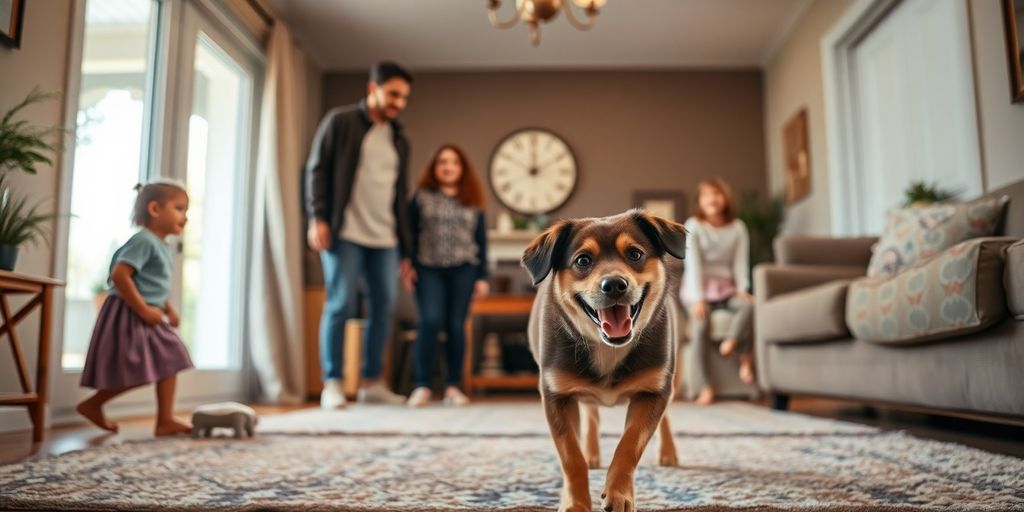
Staying Calm During Pickup
At pickup, keep your voice and movements calm. Give your dog space to approach you rather than crowding them with attention. A peaceful journey home can help make their introduction to the new environment feel less overwhelming.
Introducing Your Dog to Their New Environment
Once you’re home, it’s time for a little tour! Start by showing your dog around the house. Here are some tips:
- Take it slow: Let your dog explore at their own pace.
- Show them their space: Lead them to their bed or crate so they know where they can feel safe.
- Keep it quiet: Limit loud noises and excitement to help them settle in.
First Walk Around the Neighborhood
After your dog has had some time to adjust, it’s a great idea to take them for a walk. This helps them get familiar with their new surroundings. Here’s what to keep in mind:
- Use a leash: Keep your dog on a leash for safety.
- Let them sniff: Allow your dog to explore different smells; it’s a big part of how they learn.
- Set boundaries: Teach them how to walk nicely beside you.
Remember, the first day is all about making your new dog feel comfortable and safe. Take your time, and enjoy the journey together!
Establishing a Routine
Creating a routine for your new dog is super important! It helps them feel safe and know what to expect every day. Here’s how to get started:
Feeding Schedule
- Feed your dog at the same times each day. This helps them understand when to expect meals.
- Use commands like "sit" or "wait" before giving them their food. This teaches them patience.
- Make sure to provide fresh water at all times.
Exercise and Playtime
- Take your dog for a walk at least once a day. Aim for 30 minutes to an hour.
- Play with them using toys or games like fetch. This keeps them active and happy.
- Set aside time for training sessions to teach them basic commands.
Training Sessions
- Keep training sessions short and fun, around 5-10 minutes.
- Focus on one command at a time, like "sit," "stay," or "come."
- Always reward your dog with treats or praise when they do well.
Remember, consistency is key! Sticking to a routine helps your dog adjust and feel more at home.
Building a Relationship with Your New Dog
Using Affection as a Reward
Building a bond with your new dog is all about positive interactions. Using affection as a reward can help your dog feel loved and secure. Here are some ways to show your love:
- Give belly rubs and ear scratches.
- Use a soft voice when talking to them.
- Offer treats during training sessions.
Understanding Canine Behavior
To connect with your dog, it’s important to understand how they think and feel. Dogs communicate through body language, so watch for these signs:
- Tail wagging can mean happiness.
- Barking might indicate excitement or alertness.
- Cowering can show fear or anxiety.
Avoiding Common Mistakes
When building a relationship, it’s easy to make mistakes. Here are some things to avoid:
- Overwhelming your dog with too much attention at once.
- Ignoring their signals when they need space.
- Using harsh training methods that can damage trust.
Remember, building a relationship takes time and patience. Enjoy the journey and celebrate small victories along the way!
Helping Your Dog Adjust to Their New Home
Bringing a new dog into your life is super exciting, but it can also be a bit overwhelming for both you and your furry friend. Patience is key! Here are some tips to help your new pup feel at home:
The 3-3-3 Rule
This rule helps you understand how your dog will adjust over time:
- First 3 Days: Your dog might feel scared and overwhelmed. They may hide or not eat much. Just give them space and let them explore at their own pace.
- Next 3 Weeks: Your dog will start to feel more comfortable. They may show more playful behavior and start to bond with you.
- Final 3 Months: By now, your dog should be fully adjusted to their new home and routine. Keep reinforcing good behavior!
Dealing with Anxiety and Stress
New environments can be stressful for dogs. Here are some ways to help:
- Create a Safe Space: Set up a cozy area with their bed and toys where they can retreat when feeling anxious.
- Stay Calm: Your dog can pick up on your emotions. If you stay calm, it helps them feel more secure.
- Routine is Important: Stick to a consistent schedule for feeding, walks, and playtime to help your dog know what to expect.
Gradual Introduction to Family Members and Pets
When introducing your new dog to family and other pets, take it slow:
- One at a Time: Introduce them to one family member or pet at a time to avoid overwhelming them.
- Supervised Meetings: Always supervise initial interactions to ensure everyone is safe and comfortable.
- Positive Reinforcement: Reward your dog with treats and praise when they interact calmly with new people or pets.
Remember, every dog is unique, and some may take longer to adjust than others. Just keep showering them with love and support!
Long-Term Tips for a Happy Life Together
Continued Training and Socialization
Training doesn’t stop after the first few weeks. Keep working with your dog to strengthen your bond and teach them new things. Here are some tips:
- Attend obedience classes together.
- Socialize your dog with other pets and people.
- Practice commands regularly to reinforce learning.
Monitoring Health and Wellness
Your dog’s health is super important! Make sure to:
- Schedule regular vet check-ups.
- Keep an eye on their diet and weight.
- Watch for any changes in behavior or energy levels.
Maintaining a Consistent Routine
Dogs thrive on routine. Here’s how to keep things steady:
- Stick to a feeding schedule.
- Set regular times for walks and play.
- Create a bedtime routine to help them wind down.
Remember, building a strong relationship with your dog takes time and effort. Enjoy the journey together!
Wrapping It Up: Your New Best Friend
So, you’ve brought home your new furry buddy! Remember, it’s all about patience and love. The first few days can be a bit tricky as your dog gets used to their new digs. Stick to a routine, give them space when they need it, and shower them with affection when they do something right. Before you know it, your new pup will feel right at home, and you’ll both be enjoying all the fun and cuddles that come with being a pet parent. Just take it one day at a time, and soon enough, you’ll have a loyal friend for life!


Discussion about this post